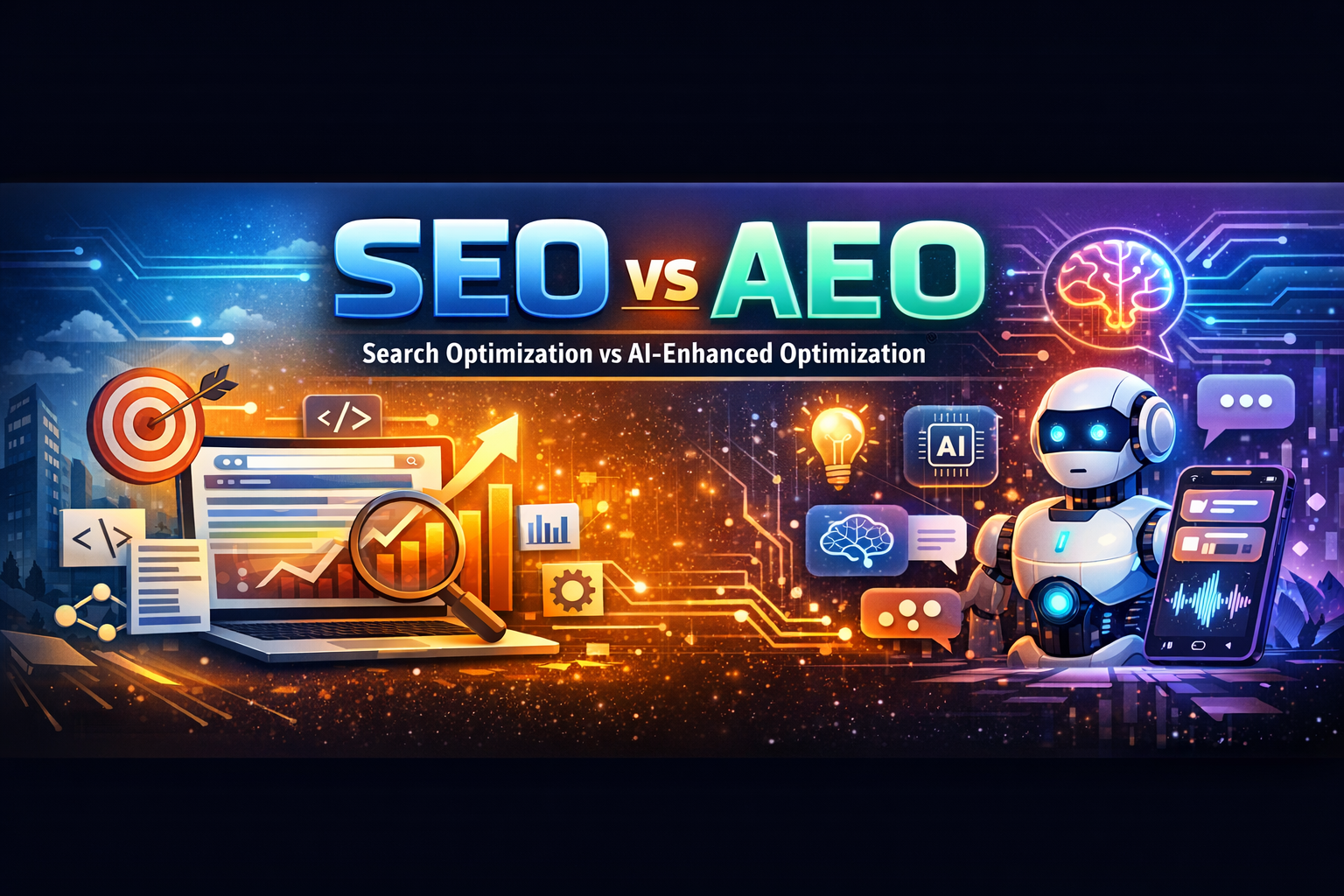
In the modern digital world, where search traffic drives a large portion of website visits, SEO and AEO (AI-Enhanced Optimization) are becoming essential aspects of marketing. The emergence of AI and large language models (LLM) has changed the rules of the game. This article explains the difference between SEO and AEO and explores how AI is reshaping digital marketing and whether businesses should adopt it for optimization.
What Are SEO and AEO?
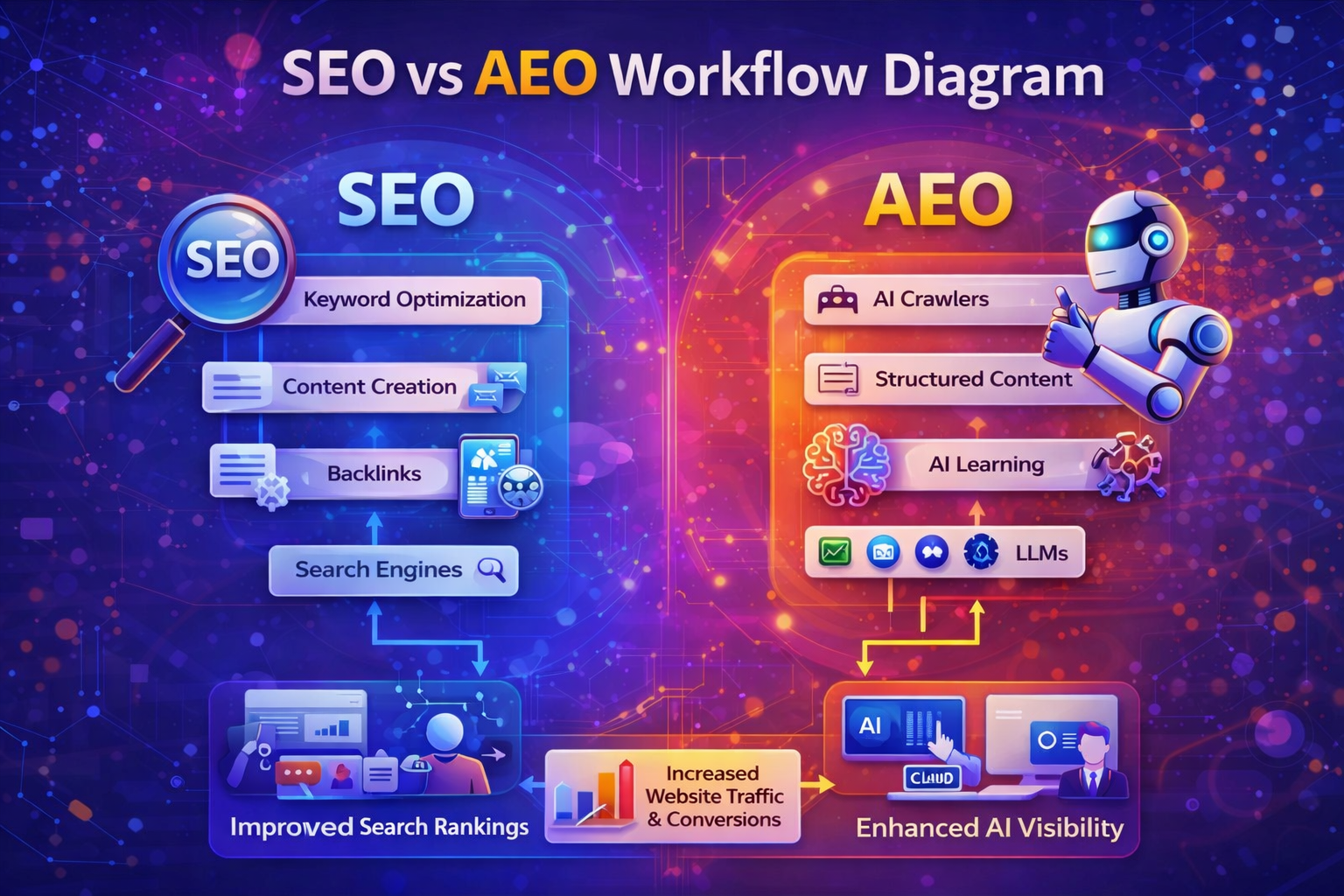
SEO (Search Engine Optimization) is the process of designing website content and structure to improve visibility in search engines. This includes using keywords, optimizing titles and meta descriptions, creating high-quality content, infographics, and other technical aspects.
AEO (AI-Enhanced Optimization) uses artificial intelligence to automate marketing optimization, content creation, and customer interactions. AI can analyze large datasets, identify trends, suggest optimizations, and predict the effectiveness of different strategies.
Key Differences Between SEO and AEO
1. Time and Cost
SEO: Manual process requiring significant planning, analysis, and site adjustments.
AEO: AI automates many parts of the optimization process, significantly reducing time and costs.
2. Handling Large Data Volumes
SEO: Traditional SEO can struggle with processing large datasets.
AEO: AI can quickly analyze massive amounts of data and discover trends invisible to humans.
3. Predictive Capabilities
SEO: Forecasting results requires extensive analysis.
AEO: AI predicts outcomes accurately based on large datasets, aiding decision-making.
4. User-Centric Optimization
SEO: Focused on keywords and search ranking improvement.
AEO: AI analyzes user behavior, interests, and preferences to provide personalized and effective optimizations.
Impact on Digital Marketing
Increased Efficiency
AEO identifies problems quickly and finds optimal solutions to improve marketing performance, lowering ad costs and increasing ROI.
Enhanced Personalization
AI provides accurate recommendations for content and marketing campaigns, tailoring strategies for each user based on behavioral data.
Automated Testing
AEO automates many phases of testing, enabling faster insights and site or campaign adjustments.
Analytics and Forecasting
AI gives marketers powerful data analysis capabilities, including sales forecasting, trend monitoring, and data-driven decisions.
AI Integration Examples in SEO / AEO
Developers and marketers can integrate AI into platforms like Magento 2 using open-source modules from Packagist:
- Automated product content generation
- AI product feeds for marketplaces
- Enhanced customer interactions
Thees modules help AI systems like ChatGPT, Claude, Gemini, and other large language models (LLMs) understand your site structure and content for better indexing, AI recommendations, and enhanced visibility.
The LLMs.txt module helps generate structured, AI-friendly content that can be used by modern AI systems and agents.
👉 More information: https://packagist.org/packages/angeo/module-llms-txt
Summary
- SEO provides the foundation for site visibility.
- AEO adds speed, analytics, and personalization.
- Combining SEO and AEO allows maximum results in digital marketing.
- AI helps process large datasets and deliver accurate answers and recommendations to users.
Start integrating AI into your marketing strategies today using modules and tools that automate processes, enhance personalization, and optimize content for AI-driven search.
What is the difference between SEO and AEO?
SEO focuses on ranking in search engines, while AEO is designed for AI-driven search and answer engines.
Is AEO necessary for ecommerce?
Yes, especially if your store integrates with AI platforms or chat assistants to provide direct answers to users.
How to combine SEO and AEO?
Optimize content for both traditional keywords (SEO) and AI-ready formats like FAQ schema, structured data, and natural language answers (AEO).
Ready to go further? See how stores become invisible to AI and what the new commerce infrastructure looks like: Why Your Store Is Invisible to ChatGPT — and How to Fix It →


0 Comments